
Celia McCormick, Au.D
September 3, 2024
3 Min Read
If you or a loved one are exploring treatment options for hearing loss, the array of choices available can be daunting.
With hearing loss projected to affect nearly 2.5 billion people by 2050 according to the World Health Organization, understanding your options for treatment is more crucial than ever.
This guide aims to demystify the process and provide an honest, unbiased overview of the different treatments available, helping you make an informed decision based on your specific needs.
Essential Considerations Before Choosing a Treatment
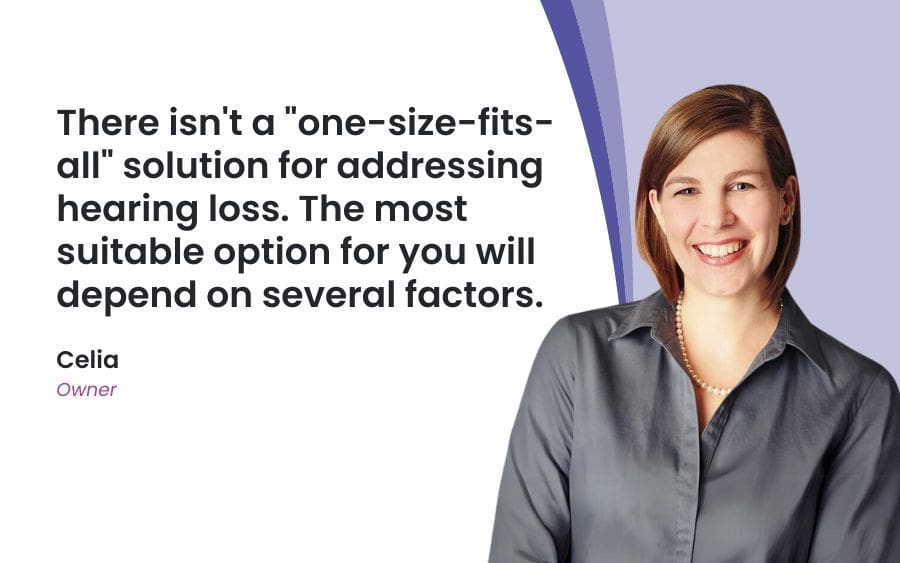
Before diving into the various hearing loss treatments, it’s important to consider your individual circumstances. There isn't a "one-size-fits-all" solution for addressing hearing loss. The most suitable option for you will depend on several factors, including:
Understanding these aspects will help you navigate through the options more effectively.
Exploring Your Hearing Loss Treatment Options
Here’s a breakdown of the various treatment options available, ranging from basic solutions to advanced technologies:
For individuals seeking a temporary and economical solution to hearing challenges, utilizing earphones and cell phone apps can be an effective first step.
These apps transform your smartphone into a basic hearing assistive device by using its microphone to capture sound and then amplifying it through earphones.
While this method is not a replacement for professional hearing aids, it can provide a quick fix in certain situations.
Pros:
Cost-effective: Most apps are free or charge a minimal fee, and the only additional cost is earphones, which many users already own.
Immediate Access: As long as you have a smartphone and earphones, you can download the app and start using it right away.
Portable: Since it utilizes your smartphone, it’s a solution that you can carry and use anywhere.
Cons:
Basic Amplification: These apps do not differentiate between types of sounds and tend to amplify all sounds equally, which can be overwhelming in noisy environments.
Not Customized to Individual Hearing Loss: Unlike prescribed hearing aids, these apps do not account for specific hearing loss patterns, such as frequency-specific hearing loss.
Dependence on Smartphone and Earphones: The need to use a smartphone and earphones continuously can be inconvenient and may interfere with normal phone use. Additionally, having earphones in can isolate the user from natural sound environments.
Lack of Professional Support: There is no professional guidance or adjustment, which means any underlying issues contributing to hearing loss are not addressed.
Ideal Usage: These apps are best suited for individuals experiencing minimal hearing challenges who need occasional assistance in relatively quiet environments.
They can be particularly useful in settings like watching TV, having one-on-one conversations in quiet rooms, or listening to a speaker in a quiet meeting room.
The advent of Over-the-Counter (OTC) hearing aids marked a significant shift in the accessibility and affordability of hearing solutions.
As approved by the FDA in 2022, these devices are intended for adults who perceive they have mild to moderate hearing loss.
OTC hearing aids aim to provide a more accessible option without the need for a medical exam, prescription, or a fitting by a professional.
Pros:
Accessibility: Easily available online or at retail stores, removing the barrier of medical appointments and personalized fittings.
Affordability: Generally less expensive than prescription hearing aids, making them a more feasible option for those on a budget.
Convenience: Quick and easy to obtain, with no waiting period for appointments or custom fittings.
Cons:
Lack of Personalization: Since they are not customized to the individual’s specific audiometric profile, they may not address all aspects of hearing loss, such as varying degrees of loss across different frequencies.
Self-Diagnosis Risk: Users without a proper diagnosis may choose a device that is inappropriate for their level of hearing loss, potentially leading to inadequate amplification or further hearing damage.
Limited Features: While some OTC aids offer advanced features, they generally do not match the full capability or customization of prescription hearing aids administered by professionals.
Popular Brands and Models:
Brands like Bose, Sony, and Jabra have entered the OTC market, each offering devices that aim to balance cost with functionality. These products typically range in price depending on the sophistication of their features.
Ideal Use: OTC hearing aids are best suited for those who are certain they have mild to moderate hearing loss and who are looking for a quick and cost-effective solution.
They are particularly appealing to first-time hearing aid users who want to try out hearing assistance without the commitment of a high-priced, professionally fitted device.
Personal Sound Amplification Products (PSAPs) are wearable electronic devices designed for individuals who do not have diagnosed hearing loss but are seeking to amplify sounds in certain situations.
They are distinct from hearing aids in that they are not regulated by the FDA as medical devices and are not intended to compensate for impaired hearing.
Pros:
Cost-effective: PSAPs are typically less expensive than prescription hearing aids, making them accessible to a broader range of users.
No Prescription Required: Users can purchase these devices without a hearing test or a prescription, offering an immediate solution for those who need slight amplification in certain scenarios.
Variety of Uses: Ideal for situations like hunting, bird watching, or listening to lectures where a slight enhancement of sound can be beneficial.
Cons:
Not for Hearing Loss: They are not suitable for individuals with significant hearing loss and should not be used as a substitute for medically prescribed hearing aids.
Limited Features: Compared to hearing aids, PSAPs generally have fewer features and less sophisticated sound processing technologies.
Potential for Misuse: There is a risk that individuals with undiagnosed hearing loss may use PSAPs instead of seeking professional evaluation and appropriate treatment.
Ideal Use: PSAPs are best used by individuals who understand their limitations and are looking for a boost in hearing for specific situations where environmental sounds need to be enhanced.
They are particularly popular among those who engage in outdoor activities or who find themselves in settings where they need to hear better over distances.
Online hearing aids with audiological remote support represent a modern approach to hearing care, blending the convenience of internet shopping with professional audiological support.
These devices are intended for individuals with mild to moderate hearing loss who seek a balance between customization and convenience.
Pros:
Convenient Access: From the hearing test to the purchase and fitting, every step is conducted online, eliminating the need to visit a clinic.
Professional Support: Despite the remote nature, users have access to licensed audiologists who can provide expert guidance and make adjustments to the hearing aids as needed.
Advanced Features: Many such hearing aids are equipped with the latest technologies that offer high-quality sound and seamless integration with other digital devices.
Cons:
Reliance on Self-Testing: Online hearing tests may not be as accurate or comprehensive as those performed in a professional setting, potentially leading to less optimal programming of the hearing aids.
Lack of Physical Examination: Audiologists cannot physically examine the user's ears, which means conditions that could impact hearing, such as earwax build-up or infections, might go unnoticed.
Potentially Impersonal: While remote support is helpful, it may not provide the same level of personal care and immediate response as in-person visits.
Ideal Use: Online hearing aids with remote support are best for those who are comfortable using digital technologies and prefer the convenience of managing their hearing health remotely.
They are ideal for individuals with busy lifestyles or those who live in areas without easy access to audiological clinics.
Big box retail stores like Costco and Sam's Club have increasingly become popular destinations for purchasing hearing aids.
These stores offer a combination of affordability, accessibility, and the convenience of one-stop shopping, making them an attractive option for many hearing aid users.
Pros:
Cost-Effective: Generally, hearing aids from big box stores are less expensive than those from traditional audiology clinics.
Convenience: Customers can benefit from the convenience of getting a hearing test, purchasing a hearing aid, and having it fitted all in one visit.
Access to Refunds and Warranties: Most big box stores offer generous return policies and warranties, providing customers with a degree of security in their purchase.
Cons:
Generic Hearing Tests: The hearing tests offered are typically basic and may not be as thorough as those conducted in specialized audiology clinics. They might not identify more complex hearing issues.
Limited Follow-Up Care: While initial fitting services are provided, ongoing support and fine-tuning may be less accessible. Customers might experience longer wait times for service appointments or follow-up care.
Variable Expertise: The level of expertise of the staff can vary significantly. While all are trained to fit hearing aids, they may not have the same level of training or experience as audiologists in dedicated clinics.
Ideal Use Cases: Big box retail stores are best suited for individuals with straightforward, primarily age-related hearing loss who are looking for a cost-effective and convenient solution without needing highly specialized care.