Hearing Loss Happens Slowly—But Its Impact Builds Quickly
Hearing loss can either be inherited through genetic likelihood or acquired due to a variety of causes; ear trauma due to loud noises, age-related hearing loss, illness, and even some negative reactions to medication can cause hearing loss.
Hearing loss is also gradual and often ignored for a long time – it’s among the reasons why nearly 70% of people with a hearing loss wait up to a decade before taking action to optimize their hearing.
Unfortunately, hearing loss only worsens over time as well as affecting your mental health, cognitive functions, and even your balance. The longer you wait, the worse it will get.
Hearing loss often goes unnoticed until it starts to affect your day-to-day life. Struggling to understand what people say, asking loved ones to repeat themselves, turning the volume up to max on your TV or smartphone… There are signs, but people will often ignore them.
Loved ones and friends will notice your hearing struggles before you do. If someone close to you has been telling you to get your hearing checked, chances are you may need it.

01
Initial Consultation & Case History
Your hearing specialist will start your comprehensive hearing assessment with a few questions related to your health, your hearing, and any other relevant information regarding your lifestyle, job, and recreational activities. These questions are to give us some clarity about how you may have developed a hearing loss, whether it be genetic or acquired.
02
Ear Examination with Otoscopy
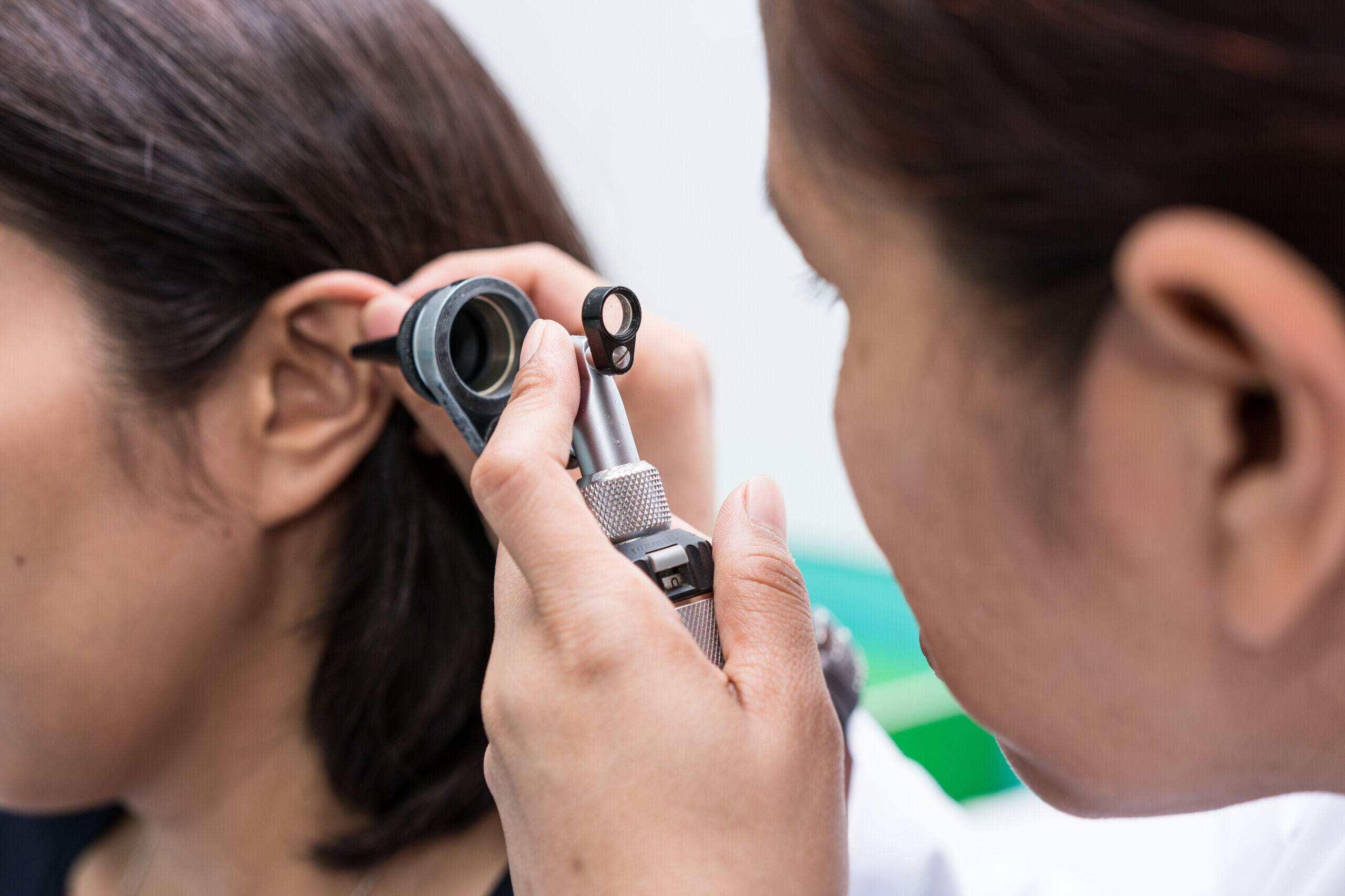
We’ll then go into a physical examination of your ears to search for infection or earwax impaction, which can be another cause for hearing loss. Your hearing expert will use an otoscope to check out your ears for any obstructions to the ear canal.
After that preliminary check, we’ll test your ears with a collection of audiometry assessments:
03
Pure Tone Audiometry
Pure Tone Audiometry, where you’ll be fitted with headphones and asked to respond to tones of various frequencies and volumes
04
Speech Audiometry
Speech Audiometry, which measures your levels of speech reception and sentence-in-noise testing to see your ability to understand conversational speech

05
Bone Conduction Testing
Bone Conduction Audiometry, where we place a device behind the ear that transmits tones into the inner ear
06
Tympanometry
Tympanometry, where we test pressure on your eardrum to evaluate the condition of your middle ear
07
Otoacoustic Emissions (OAEs)
Otoacoustic Emissions, which measure the response of the hair cells in your inner ear
Answering Your Questions About Comprehensive Hearing Tests
How long does a hearing test take?
Most hearing assessments take 30-60 minutes to complete.
Do I need to be referred by my doctor?
How often do I need a hearing test?
Will a hearing test be covered by my insurance?
I wear hearing aids, can I still have a hearing test?
Will you explain my results to me?